IN METASTATIC NSCLC WITH CERTAIN ACTIONABLE MUTATIONS
IMMUNOTHERAPY IS NOT AN APPROPRIATE FIRST-LINE CHOICE*

*Not applicable to patients with a KRAS G12C or ERBB2 (HER2) mutation without another actionable mutation or patients with certain EGFR exon 20 insertion mutations.14-17
†Based on 6 studies of 3867 patients with NSCLC and EGFR sensitizing mutations, and 1 study including 345 patients with NSCLC and ALK mutations. Of the 3867 patients with EGFR mutations, 395 were treated with immunotherapy followed by EGFR TKIs. Of the 345 patients with ALK mutations, 3 were treated with immunotherapy followed by an ALK TKI. Adverse reactions, including ILD and hepatotoxicity, were observed following the sequential use of IO followed by TKI therapy in patients who had actionable mutations.1-7
‡Phase 2, single-arm study of pembrolizumab in patients with advanced EGFRm NSCLC. 82% of enrolled patients were treatment naïve. The clinical study was stopped due to lack of efficacy after 11 of 25 planned patients were enrolled. No responses were observed in 10 of the 11 patients treated, even in patients with PD-L1 expression ≥50%. The patient who did have a response was revealed to be EGFR wild-type upon repeat analysis.13
NCCN Clinical Practice Guidelines in Oncology (NCCN Guidelines®) recommend that patients with mNSCLC should be tested for certain driver mutations, including EGFR, ALK, KRAS, ROS1, BRAF, NTRK 1/2/3, MET exon 14 skipping, RET, and ERBB2 (HER2).18*§
For patients who require an urgent start to therapy but molecular testing is pending, consider holding immunotherapy for one cycle unless confirmed that no driver mutations are present.18

BEFORE TREATING YOUR PATIENT WITH mNSCLC WITH 1L IMMUNOTHERAPY
§The NCCN Guidelines® for NSCLC provide recommendations for certain individual biomarkers that should be tested and recommend testing techniques, but do not endorse any specific commercially available biomarker assays or commercial laboratories.18
||KEYNOTE-024, KEYNOTE-042, KEYNOTE-021 Cohort G, KEYNOTE-189, CHECKMATE 026, CHECKMATE 227, CHECKMATE 9LA, IMpower110, IMpower130, IMpower132, IMpower150, POSEIDON, EMPOWER-Lung 1, and EMPOWER-Lung 3 did not allow patients with treatment-naïve metastatic EGFR or ALK mutation-positive NSCLC. In the IMpower130 and IMpower150 trials, patients with metastatic EGFR or ALK mutation-positive NSCLC were allowed only after progression on TKI therapy or intolerance to TKI treatment. There are no head-to-head trials comparing IO and EGFR or ALK-TKIs in patients with EGFR or ALK mutation-positive NSCLC.20-33



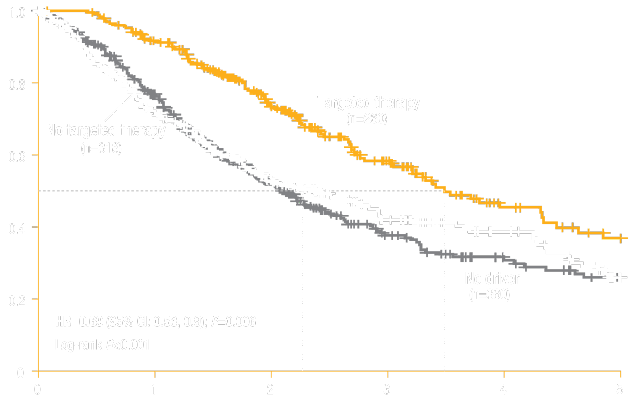
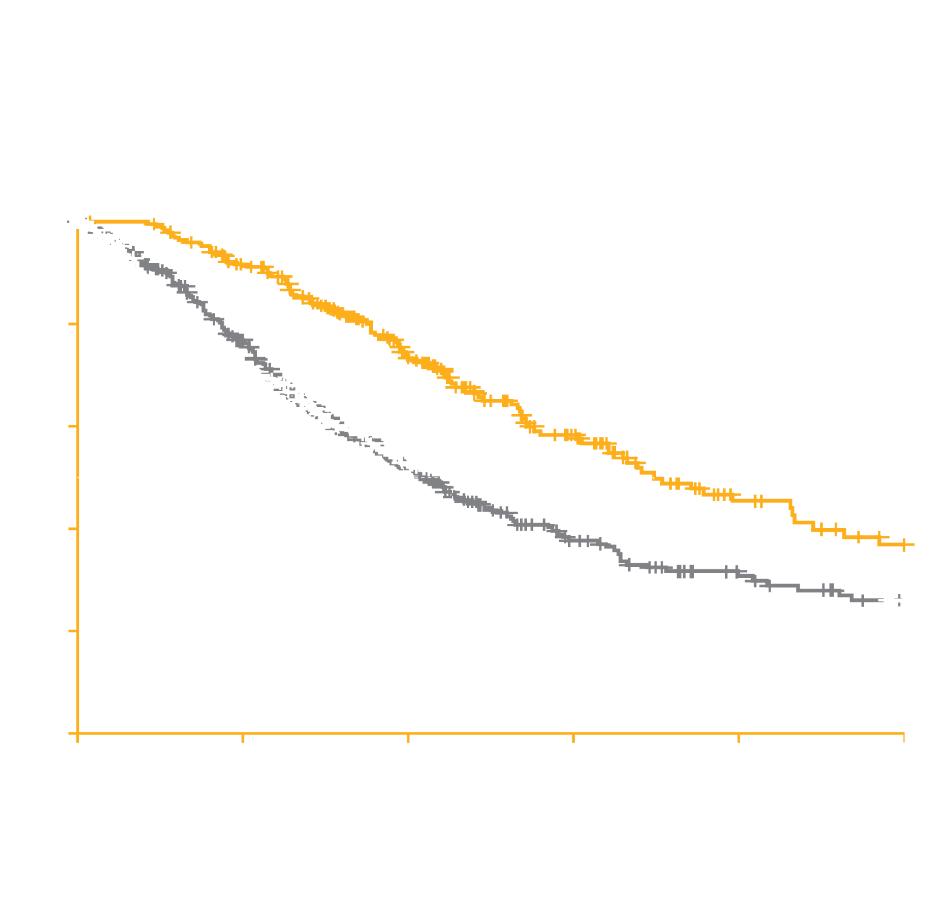






>1 MORE YEAR
of median OS
with targeted therapy vs no targeted therapy
Median overall survival (95% CI): Actionable mutation + targeted therapy, 3.49 years (3.02, 4.33); actionable mutation + no targeted therapy, 2.38 years (1.81, 2.93); no actionable mutation, 2.08 years (1.84, 2.46)
MAY LEAD TO A LONGER LIFE

RECEIVE AN EGFR TKI
RECEIVED AN EGFR TKI
EGFRm

RECEIVE AN ALK INHIBITOR
RECEIVED AN ALK INHIBITOR
ALK+
*Multicenter US study of 1017 patients with metastatic lung adenocarcinoma to determine the frequency of 10 oncogenic drivers, including MET, ALK, and EGFR alterations.34
†Retrospective analysis of data from 206 community cancer sites to assess the adherence to guidelines for EGFR and ALK testing for mNSCLC and the timing associated with receipt of test results. Data were analyzed for 16,316 patients with mNSCLC diagnosed after January 1, 2014, with at least 2 visits before December 31, 2016.35
AT THE EARLIEST OPPORTUNITY TO HELP INFORM GUIDELINE-RECOMMENDED TREATMENT OPTIONS
IN mNSCLC
APPROPRIATE 1L TREATMENT STARTS WITH KNOWING THE DRIVER OF DISEASE
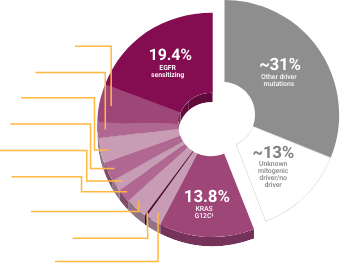

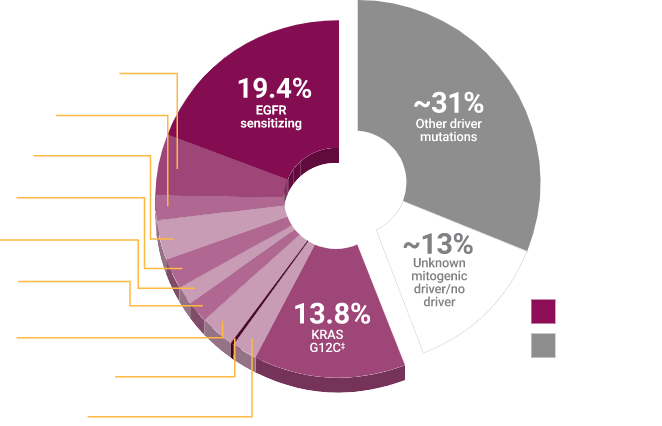


PD-L1
EGFRm
EGFRm
& PD-L1
UP TO 70%
of patients with EGFRm mNSCLC also express PD-L1 at levels >1%39-43
| Driver mutation | % with PD-L1 expression (PD-L1 expression >1%/PD-L1 status available) |
|---|---|
| ROS1 | 100.0 (5/5) |
| MET | 75.0 (15/20) |
| RET | 75.0 (6/8) |
| BRAF | 70.0 (7/10) |
| KRAS | 66.3 (63/95) |
| ALK | 63.6 (7/11) |
| HER2 | 53.3 (8/15) |
TARGETED THERAPY TAKES PRECEDENCE: Treatment with targeted therapy should take precedence over treatment with immunotherapy in patients with mNSCLC and certain oncogenic drivers in the first-line setting, even when PD-L1 expression levels are elevated.18
In metastatic NSCLC, don’t assume your patients’ biomarker status





46% History of smoking (n=534)
32% Male (n=366)
85% Non-Asian (n=842)#
*Jordan et al (2017) prospectively analyzed a total of 915 tumors from 860 patients with recurrent or metastatic lung adenocarcinoma for mutations in >300 cancer-associated genes using the Memorial Sloan Kettering-Integrated Mutation Profiling of Actionable Cancer Targets (MSK-IMPACT) assay, a hybridization capture-based, next-generation sequencing platform.36
†Gatalica et al (2019) reviewed a large cohort of solid malignancies profiled by a commercial laboratory that were tested for NTRK gene fusions and other pathogenic/targetable genomic and protein alterations. Patients’ stage of disease was not disclosed. 4073 patients in the study had non-small cell lung carcinomas of adenocarcinoma histology, of which 4 patients had an NTRK fusion.37
‡Nassar et al (2021) extracted data from the registry of the American Association for Cancer Research Project Genomics Evidence Neoplasia Information Exchange (GENIE) version 8.0 to study the distribution of KRAS mutations in 32,138 patients with cancer across race and sex. KRAS mutations were identified in 1867 samples, most frequently in patients with NSCLC (1443 of 10,444). 76.3% of patients with NSCLC had lung adenocarcinoma histology. Patients’ stage of disease was not disclosed.38,45
§Mazieres et al (2019) was a multicenter, international, retrospective study of 551 patients receiving ICI monotherapy for advanced NSCLC with at least one oncogenic driver alteration. 125 patients had an EGFR mutation. D'Incecco et al (2015) was a multicenter, retrospective, Italian study that assessed PD-L1 expression in 125 patients with mNSCLC and EGFR mutations, ALK translocations, or KRAS mutations. 56 patients had an EGFR mutation. Dietel et al (2019) was a multicenter, international, retrospective study that examined PD-L1 expression in 2368 tumor samples with histologically confirmed stage IIIB/IV primary NSCLC as classified by AJCC 7th edition. 448 patients had an EGFR mutation. Brown et al (2020) analyzed PD-L1 expression in 231 samples of untreated, EGFR-mutated, advanced NSCLC.39,41-43
||From a multicenter, international, retrospective study of 551 patients receiving ICI monotherapy for advanced NSCLC with at least one oncogenic driver alteration (EGFR [exon 18-21] activating mutation, HER2 [exon 20] activating mutation, KRAS mutation, BRAF [exon 15] mutation, MET amplification or exon 14 mutation, ALK rearrangement, ROS1 rearrangement, or RET rearrangement). A total of 34 patients with more than one driver were allocated to the dominant oncogenic driver. Optionally, investigators were asked to record PD-L1 expression in tumor cells. The purpose of the study was to analyze the clinical activity of ICI therapy in the context of oncogenic driver alterations.40
¶EGFR TKI prescription data from Flatiron Health EHR-derived database. Included 1151 patients who started treatment between October 1, 2017, and April 30, 2020.44
#Calculations are based on those who specified race and exclude the 157 patients in the study for whom race was not specified.44
TEST EVERY ELIGIBLE PATIENT FOR ACTIONABLE MUTATIONS AND TREAT WITH GUIDELINE-RECOMMENDED TARGETED THERAPY WHEN APPROPRIATE
Positive liquid biopsy results are sufficient to inform treatment selection51
Negative liquid biopsy results should be reflexed to tissue biopsy51
*From a single-center, prospective cohort study of 323 patients with histologically confirmed stage IV NSCLC who had plasma testing as part of routine clinical management.46
†Multicenter North American study of 282 patients with stage IIIB or stage IV NSCLC using next-generation sequencing as the testing platform. ~98% of patients had stage IV disease. Turnaround time is for next-generation sequencing.47
‡5 out of 22 (23%) patients whose tissue was not able to be retrieved for biopsy were found to have actionable mutations through liquid biopsy only.46
§22 out of the 79 (28%) patients who did not have a sufficient quality/quantity of DNA were found to have targetable mutations via liquid biopsy.46
||Based on Wu et al (2019), a review of the current clinical applications and future directions of liquid biopsy in the management of NSCLC.48

1L, first-line; AJCC, American Joint Committee on Cancer; ALK, anaplastic lymphoma kinase; ASCO, American Society of Clinical Oncology; BRAF, v-raf murine sarcoma viral oncogene homolog B1; CI, confidence interval; EGFR, epidermal growth factor receptor; EGFRm, epidermal growth factor receptor mutation; EHR, electronic health records; ERBB2, v-erb-b2 erythroblastic leukemia viral oncogene homolog 2; G12C, glycine-to-cysteine substitution at codon 12; HER2, human epidermal growth factor receptor 2; HR, hazard ratio; IASLC, International Association for the Study of Lung Cancer; ICI, immune checkpoint inhibitor; ILD, interstitial lung disease; IO, immunotherapy; KRAS, V-Ki-ras2 Kirsten rat sarcoma 2 viral oncogene homolog; L858R, exon 21 leucine 858 arginine substitution; MET, mesenchymal-epithelial transition; mNSCLC, metastatic non-small cell lung cancer; NCCN, National Comprehensive Cancer Network® (NCCN®); NSCLC, non-small cell lung cancer; NTRK, neurotrophic tyrosine receptor kinase; ORR, overall response rate; OS, overall survival; PD-L1, programmed death-ligand 1; QNS, quantity not sufficient; RET, rearranged during transfection; ROS1, ROS proto-oncogene 1 receptor tyrosine kinase; T790M, exon 20 threonine 790 methionine substitution; TKI, tyrosine kinase inhibitor.
References: 1. Oshima Y, Tanimoto T, Yuji K, Tojo A. EGFR-TKI-associated interstitial pneumonitis in nivolumab-treated patients with non-small cell lung cancer. JAMA Oncol. 2018;4(8):1112-1115. 2. Schoenfeld AJ, Arbour KC, Rizvi H, et al. Severe immune-related adverse events are common with sequential PD-(L)1 blockade and osimertinib. Ann Oncol. 2019;30(5):839-844. 3. Ohe Y, Kato T, Sakai F, et al. Real-world use of osimertinib for epidermal growth factor receptor T790M-positive non-small cell lung cancer in Japan. Jpn J Clin Oncol. 2020;50(8):909-919. 4. Yamaguchi O, Kaira K, Kawasaki T, et al. Severe hepatotoxicity due to osimertinib after nivolumab therapy in patients with non-small cell lung cancer harboring EGFR mutation. Thorac Cancer. 2020;11(4):1045-1051. 5. Uchida T, Kaira K, Yamaguchi O, et al. Different incidence of interstitial lung disease according to different kinds of EGFR-tyrosine kinase inhibitors administered immediately before and/or after anti-PD-1 antibodies in lung cancer. Thorac Cancer. 2019;10(4):975-979. 6. Kotake M, Murakami H, Naito T, et al. 456P Practical use of osimertinib in Japanese patients with EGFR T790M mutation positive advanced non-small-cell lung cancer [abstract]. Ann Oncol. 2016;27(suppl9):ix147. 7. Lin JJ, Chin E, Yeap BY, et al. Increased hepatotoxicity associated with sequential immune checkpoint inhibitor and crizotinib therapy in patients with non-small cell lung cancer. J Thorac Oncol. 2019;14(1):135-140. 8. Keytruda [package insert]. Whitehouse Station, NJ: Merck & Co., Inc; 2023. 9. Tecentriq [package insert]. South San Francisco, CA: Genentech Inc.; 2023. 10. Opdivo [package insert]. Princeton, NJ: Bristol-Myers Squibb Company; 2023. 11. Yervoy [package insert]. Princeton, NJ: Bristol-Myers Squibb Company; 2023. 12. Libtayo [package insert]. Tarrytown, NY: Regeneron Pharmaceuticals, Inc.; 2023. 13. Lisberg A, Cummings A, Goldman JW, et al. A phase II study of pembrolizumab in EGFR-mutant, PD-L1+, tyrosine kinase inhibitor naïve patients with advanced NSCLC. J Thorac Oncol. 2018;13(8):1138-1145. 14. Lumakras [package insert]. Thousand Oaks, CA: Amgen Inc.; 2023. 15. Skoulidis F, Li BT, Dy GK, et al. Sotorasib for lung cancers with KRAS p.G12C mutation. N Engl J Med. 2021;384(25):2371-2381. 16. Rybrevant [package insert]. Horsham, PA: Janssen Biotech, Inc.; 2022. 17. ENHERTU [package insert]. Basking Ridge, NJ: Daiichi Sankyo, Inc.; 2022. 18. Referenced with permission from the NCCN Clinical Practice Guidelines in Oncology (NCCN Guidelines®) for Non-Small Cell Lung Cancer V.7.2024. © National Comprehensive Cancer Network, Inc. 2024. All rights reserved. Accessed June 27, 2024. To view the most recent and complete version of the guideline, go online to NCCN.org. NCCN makes no warranties of any kind whatsoever regarding their content, use or application and disclaims any responsibility for their application or use in any way. 19. Hanna NH, Robinson AG, Temin S, et al. Therapy for stage IV non-small-cell lung cancer with driver alterations: ASCO and OH (CCO) joint guideline update. J Clin Oncol. 2021;39(9):1040-1091. 20. Reck M, Rodríguez-Abreu D, Robinson AG, et al; KEYNOTE-024 Investigators. Pembrolizumab versus chemotherapy for PD-L1–positive non-small-cell lung cancer. N Engl J Med. 2016;375(19):1823-1833. 21. Mok TSK, Wu YL, Kudaba I, et al; KEYNOTE-042 Investigators. Pembrolizumab versus chemotherapy for previously untreated, PD-L1-expressing, locally advanced or metastatic non-small-cell lung cancer (KEYNOTE-042): a randomised, open-label, controlled, phase 3 trial. Lancet. 2019;393(10183):1819-1830. 22. Langer CJ, Gadgeel SM, Borghaei H, et al; KEYNOTE-021 Investigators. Carboplatin and pemetrexed with or without pembrolizumab for advanced, non-squamous non-small-cell lung cancer: a randomised, phase 2 cohort of the open-label KEYNOTE-021 study. Lancet Oncol. 2016;17(11):1497-1508. 23. Gandhi L, Rodríguez-Abreu D, Gadgeel S, et al; KEYNOTE-189 Investigators. Pembrolizumab plus chemotherapy in metastatic non–small-cell lung cancer. N Engl J Med. 2018;378(22):2078-2092. 24. Carbone DP, Reck M, Paz-Ares L, et al; CheckMate 026 Investigators. First-line nivolumab in stage IV or recurrent non–small-cell lung cancer. N Engl J Med. 2017;376(25):2415-2426. 25. Hellmann MD, Ciuleanu TE, Pluzanski A, et al. Nivolumab plus ipilimumab in lung cancer with a high tumor mutational burden. N Engl J Med. 2018;378(22):2093-2104. 26. Paz-Ares L, Ciuleanu T-E, Cobo M, et al. First-line nivolumab plus ipilimumab combined with two cycles of chemotherapy in patients with non-small-cell lung cancer (CheckMate 9LA): an international, randomised, open-label, phase 3 trial [published correction appears in Lancet Oncol. 2021;22(3):e92]. Lancet Oncol. 2021;22(2):198-211. 27. West H, McCleod M, Hussein M, et al. Atezolizumab in combination with carboplatin plus nab-paclitaxel chemotherapy compared with chemotherapy alone as first-line treatment for metastatic non-squamous non-small-cell lung cancer (IMpower130): a multicentre, randomised, open-label, phase 3 trial. Lancet Oncol. 2019;20(7):924-937. 28. Socinski MA, Jotte RM, Cappuzzo F, et al; IMpower150 Study Group. Atezolizumab for first-line treatment of metastatic nonsquamous NSCLC. N Engl J Med. 2018;378(24):2288-2301. 29. Nishio M, Barlesi F, West H, et al. Atezolizumab plus chemotherapy for first-line treatment of nonsquamous NSCLC: results from the randomized phase 3 IMpower132 trial. J Thorac Oncol. 2021;16(4):653-664. 30. Herbst RS, Giaccone G, de Marinis F, et al. Atezolizumab for first-line treatment of PD-L1-selected patients with NSCLC. N Engl J Med. 2020;383(14):1328-1339. 31. Sezer A, Kilickap S, Gümüş M, et al. Cemiplimab monotherapy for first-line treatment of advanced non-small-cell lung cancer with PD-L1 of at least 50%: a multicentre, open-label, global, phase 3, randomised, controlled trial. Lancet. 2021;397(10274):592-604. 32. Gogishvili M, Melkadze T, Makharadze T, et al. Cemiplimab plus chemotherapy versus chemotherapy alone in non-small cell lung cancer: a randomized, controlled, double-blind phase 3 trial. Nat Med. 2022;28(11):2374-2380. 33. Johnson ML, Cho BC, Luft A, et al. Durvalumab with or without tremelimumab in combination with chemotherapy as first-line therapy for metastatic non-small-cell lung cancer: the phase III POSEIDON study. J Clin Oncol. 2023;41(6):1213-1227. 34. Kris MG, Johnson BE, Berry LD, et al. Using multiplexed assays of oncogenic drivers in lung cancers to select targeted drugs. JAMA. 2014;311(19):1998-2006. 35. Ruggiero J, Rughani J, Neiman J, Swanson S, Revol C, Green RJ. Real-world concordance of clinical practice with ASCO and NCCN guidelines for EGFR/ALK testing in aNSCLC. Presented at: ASCO Quality Care Symposium; March 3-4, 2017; Orlando, FL. 36. Jordan EJ, Kim HR, Arcila ME, et al. Prospective comprehensive molecular characterization of lung adenocarcinomas for efficient patient matching to approved and emerging therapies. Cancer Discov. 2017;7(6):596-609. 37. Gatalica Z, Xiu J, Swensen J, Vranic S. Molecular characterization of cancers with NTRK gene fusions. Mod Pathol. 2019;32(1):147-153. 38. Nassar AH, Adib E, Kwiatkowski DJ. Distribution of KRASG12C somatic mutations across race, sex, and cancer type [correspondence]. N Engl J Med. 2021;384(2):185-187. 39. Mazieres J, Drilon A, Lusque A, et al. Immune checkpoint inhibitors for patients with advanced lung cancer and oncogenic driver alterations: results from the IMMUNOTARGET registry. Ann Oncol. 2019;30(8):1321-1328. 40. Mazieres J, Drilon A, Lusque A, et al. Immune checkpoint inhibitors for patients with advanced lung cancer and oncogenic driver alterations: results from the IMMUNOTARGET registry. Ann Oncol. 2019;30(8):1321-1328 [supplemental table]. 41. D’Incecco A, Andreozzi M, Ludovini V, et al. PD-1 and PD-L1 expression in molecularly selected non-small-cell lung cancer patients. Br J Cancer. 2015;112(1):95-102. 42. Dietel M, Savelov N, Salanova R, et al. Real-world prevalence of programmed death ligand 1 expression in locally advanced or metastatic non–small-cell lung cancer: the global, multicenter EXPRESS study. Lung Cancer. 2019;134:174-179. 43. Brown H, Vansteenkiste J, Nakagawa K, et al. Programmed cell death ligand 1 expression in untreated EGFR mutated advanced NSCLC and response to osimertinib versus comparator in FLAURA. J Thorac Oncol. 2020;15(1):138-143. 44. Data on File. US-42770. EGFR TKI prescription data from Flatiron Health EHR-derived database (included patients who started treatment between October 2017 to April 2020, all data collection online). Ipsos data © Ipsos 2020, all rights reserved. AstraZeneca Pharmaceuticals LP. 45. Nassar AH, Adib E, Kwiatkowski DJ. Distribution of KRASG12C somatic mutations across race, sex, and cancer type [correspondence]. N Engl J Med. 2021;384(2):185-187 [supplementary appendix 2]. 46. Aggarwal C, Thompson JC, Black TA, et al. Clinical implications of plasma-based genotyping with the delivery of personalized therapy in metastatic non-small cell lung cancer. JAMA Oncol. 2019;5(2):173-180. 47. Leighl NB, Page RD, Raymond VM, et al. Clinical utility of comprehensive cell-free DNA analysis to identify genomic biomarkers in patients with newly diagnosed metastatic non-small cell lung cancer. Clin Cancer Res. 2019;25(15):4691-4700. 48. Wu Z, Yang Z, Dai Y, Zhu Q, Chen L. Update on liquid biopsy in clinical management of non-small cell lung cancer. Onco Targets Ther. 2019;12:5097-5109. 49. Foundation Medicine. Foundation Medicine mobile phlebotomy. https://assets.ctfassets.net/w98cd481qyp0/4jVqxTjDfcHxzGmzwyKZCb/ec459c0296895b15101ac1a21e066f94/Mobile_Phlebotomy_Overview_HCP.pdf. Published 2020. Accessed March 23, 2023. 50. Exam One, Quest Diagnostics website. Mobile phlebotomy: Flexible specimens collection solutions. https://www.examone.com/health-life-sciences/mobile-phlebotomy/. Accessed March 22, 2023. 51. Merker JD, Oxnard GR, Compton C, et al. Circulating tumor DNA analysis in patients with cancer: American Society of Clinical Oncology and College of American Pathologists Joint Review. J Clin Oncol. 2018;36(16):1631-1641. 52. Rolfo C, Mack P, Scagliotti GV, et al. Liquid biopsy for advanced NSCLC: a consensus statement from the International Association for the Study of Lung Cancer. J Thorac Oncol. 2021;16(10):1647-1662.
To receive educational and promotional information and potentially participate in programs, please provide the following information. Questions with an * are required.
You’ll hear from us soon. We hope you find the information and support helpful..
CONTINUE This information is intended for US Healthcare Professionals only.

©2024 AstraZeneca. All rights reserved. US-66126; US-89183 Last Updated 5/24